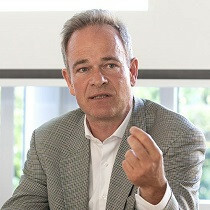
Wolfram Kaiser is Professor of European Studies at the University of Portsmouth and Visiting Professor at the College of Europe.
He has also taught (inter alia) as (visiting) professor/lecturer at the universities of NTNU Teipei, ENS Paris, ULB Brussels, NTNU Trondheim, Duisburg-Essen, Innsbruck, Cambridge, Vienna and Edinburgh and been a (visiting) senior research fellow at LMU Munich, the Centre for Global Cooperation Research (Duisburg), the Free University of Berlin, the Netherlands Institute for Advanced Studies, the Europa Institute (Edinburgh), the Centre for European Integration Studies (Bonn), and the Norwegian Nobel Institute
- 1994 Doctorate in modern history at the University of Hamburg
- 1991 M.A./B.A. in modern history, international relations and public and European law at the University of Hamburg after studies in Bonn, Oxford and Hamburg.
Publications include:
- W. Kaiser (with R. Corbett et al.), Shaping European Integration. The Directly Elected European Parliament 1979-1989 (Luxembourg: Official Publications of the European Union, 2024)
- W. Kaiser (with L. Bardi et al.), The European Ambition. The Group of the European People’s Party and European Integration (Baden-Baden: Nomos, 2020).
- W. Kaiser, Shaping European Union: The European Parliament and Institutional Reform, 1979-1989 (Brussels: European Parliament Research Service, 2018)
- (ed. with K.K. Patel), Hidden Integration. Continuities in European Cooperation in the Twentieth Century (special issue 27/2, 2018 of Contemporary European History)
- (ed. with K.K. Patel), Cooperation and Competition among International Organisations in European Integration (special issue 24/1, 2017 of European Review of History).
- (ed. with R. McMahon), Narrating European Integration: Actors and Stories (special issue 19/2, 2017 of National Identities).
- (ed. with J.-H. Meyer), International Organizations and Environmental Protection: Conservation and Globalisation in the Twentieth Century (2017).
- W. Kaiser, J. Schot, Writing the Rules for Europe. Experts, Cartels, and International Organizations (Basingstoke: Palgrave, 2014)
- W. Kaiser, S. Krankenhagen, K. Poehls, Exhibiting Europe in Museums. Transnational Networks, Collections, Narratives and Representations (New York: Berghahn, 2014).
- (ed. with J.-H. Meyer) Societal Actors in European Integration. Polity-Building and Policy-Making 1958-1992 (2013)
- (ed. with Brigitte Leucht and Michael Gehler) Transnational Networks in Regional Integration. Governing Europe 1945-83 (2010)
- (ed. with Antonio Varsori) European Union History. Themes and Debates (2010)
- (ed. with Brigitte Leucht and Morten Rasmussen) The History of the European Union. Origins of a Trans- and Supranational Polity 1950-72 (2009)
- W. Kaiser, Christian Democracy and the Origins of European Union (2007)
Professor Kaiser's research interests include European integration history, esp. political parties, transnational networks and European institutions; the role of experts and expertise in different forms of integration since the nineteenth century; and representations of the EU and European integration in museums across Europe.