This article is an opinion piece by current students or alumni of the College of Europe. The views expressed are those of the authors and do not necessarily reflect the opinions or positions of the College of Europe. Responsibility for the content lies solely with the authors.
By Giulia Galletti, Anna Haesaert, Evangelia Kostopoulou and Maria Vastardi
In this interview, Alfonso Lamadrid, Parter at Latham & Watkins in Brussels, Visiting Professor at the College of Europe and co-author of the Competition Law Blog “Chillin’Competition” shares his perspective on procedural aspects of Competition Law and DMA/DSA, as well as on his career and life beyond antitrust.
Question One: What would you say are the best and worst things about your job and about teaching at the College of Europe?
Answer: I am extremely privileged to do what I do. Both in my day to-day work as a lawyer and when teaching at the College I get to explore, debate, and sometimes even resolve, a variety of challenging issues together with very smart people (be they clients, colleagues, students, enforcers, or judges). I’m also very fortunate, because the immense majority of people I’ve come across in my work are people I value, learn from, and enjoy spending time with.
Lawyers, like professors, can also have a great impact not only on the law, but also on the fate of their clients, colleagues and students. I have always been acutely aware of that responsibility, and that is something that has also pushed me to, at least try to, do my best to make a positive impact on those around me.
The number of daily emails is probably the one thing I wouldn’t mind doing without, but even that is a luxury problem. When people often complain about how much we work in private practice, I always note that I grew up in the upper of my parents’ family hotel in a small town in northern Spain, surrounded by people (waiters, cooks, maids, receptionists and, above all my mom) who worked non-stop, particularly while others were enjoying their time off, and with many less perks.
Question Two: A piece of “counterfactual” analysis: what would you do if you weren’t in your current position?
Answer: I guess the natural path would have been for me to work in hotels or restaurants, like my parents and most of my siblings do, but I always said I wanted to do something involving reading, writing and persuading My family often jokes that I’m useless for things that can’t be learnt from books, and they have a point (although, lately, I’m pretty proud of my cooking).
When I started studying law, driven by idealism, I thought one day I would end up in diplomacy or politics (that was after ruling out a careers as a basketball player or coach). But if I had to pick an alternative occupation now, it would certainly involve a lot of writing. I’ve always felt I need to write about any topic to really think through it and aspire to understand it.
Question Three: Is that why you started writing on Chillin’Competition?
Answer: Writing on Chillin’Competition was certainly a way of forcing myself to reflect about our discipline, I mostly did it during my formative years, and I learnt an awful lot. I also had a lot of fun and met great people thanks to it. I was also immensely lucky to do it in great company, at first with Nicolas Petit (the original father of the blog who, for some reason, invited me to join him in 2009 when I was only a 24 year old LL.M student at Harvard and when we didn’t really know each other well), and then with Pablo Ibañez Colomo (who has been taking care of it, practically as a single father for the past few years). I also learnt a lot from their own writing and different approaches.
As time has passed, writing there has become more challenging for various reasons. Spending time with my kids whenever I’m not working is the main one, but I also feel I cannot be as irreverent or free spoken as we once were, and writing about issues unrelated to my daily work (or to that of my firm) is now difficult. I never liked it when people mixed their advocacy interests with their academic roles, and just as I avoid that in my courses at the College I also feel I should not write in a non-lawyer role about matters in which I may have a direct interest. When we started there were also less blogs, podcasts and sources of news and commentary; that has changed a lot too.
Question Four: Most interesting, intense or funny moment of your career?
Answer: Hearings at the EU Courts are my favourite part of the job. I enjoy the written phase of litigation too (and that is generally the one that matters most), but the sense of responsibility, the preparation and the adrenaline make you feel lucid and in control while you’re in front of the Court. After the hearing, one can go back to being dumb again.
I’ve enjoyed all my hearings, but the Google Android hearings at the General Court (5 consecutive days of hearing in Covid times) and at the Court of Justice are certainly up there in the ranking of most interesting and intense moments of my career so far.
Question Five: Is the Commission too powerful procedurally? Should there be a clearer separation between investigation and adjudication?
Answer: The Commission has a tough job and an important responsibility, and it needs to have the procedural tools to effectively enforce the rules and protect competition, including by gathering all relevant information to decide on any case. I have no problem with that, nor with the Commission combining investigative and decision-making powers, provided that proceedings and full judicial review on the merits comply with the relevant standards under Article 6 ECHR.
The fact that the Commission is not politically independent can be more of an issue as it may, in exceptional cases, give rise to the appearance that decisions are not only driven by factual and legal considerations. It is also for that reason that full, independent and thorough judicial review is critical also to legitimize the enforcement system.
Question Six: Do you expect the DMA to reduce the European Commission’s reliance on Article 102 TFEU cases against designated gatekeepers?
Answer: That was one of the goals of the DMA, and, for better or for worse, it will necessarily be one of its consequences. Article 102 TFEU will continue to apply, both to other companies and to non-designated services provided by gatekeepers, but whenever the Commission, or a complainant/plaintiff, may have a choice between relying on the DMA and on Article 102 TFEU they will obviously have great incentives to invoke the DMA.
Unlike Article 102 TFEU, the DMA doesn’t require defining markets, identifying market power/dominance, assessing competitive constraints, counterfactuals, competition on the merits, as efficient-competitors, establishing potential exclusionary effects or considering legitimate justifications or pro-competitive /pro-consumer effects. The legislator decided to do away with those analyses (and, in passing, with important procedural safeguards) for the sake of expedience; that may well be a legitimate decision, but I’m not a fan of adopting simplistic solutions to address complex problems.
Remarkably, the reason why the DMA established an absolute prohibition of certain practices (say self-preferencing) is not that they were unambiguously harmful, but because determining whether they are harmful or not requires significant work. Addressing that challenge by simply adopting an absolute ban is a curious solution in terms of proportionality, and something that I believe EU Courts may eventually need to correct.
Question Seven: What is your view on the proposed revision of Regulation 1/2003? Given the Commission's practice in applying the DMA, do you think the new framework should be similar to that of the DMA?
Answer: Regulation 1/2003 has served us well, but it makes sense to update it, particularly to the new challenges brought by digitization. My sense is that the Commission is approaching the review openly and constructively and the vast majority of the changes under discussion are sensible and appear to go in the right direction, although we could probably do more in terms of limiting regulatory fragmentation. The proposals to get rid of formal complaints (the only, and limited tool, that parties have to get the Commission to at least examine attentively concerns that do not align with political priorities) or to limit access to the file are more concerning.
The DMA’s procedural framework diluted many of the safeguards that we have in antitrust cases in terms of restrictions to access to the file, no formal complaints (and no rights for complainants), no hearing officer, or no oral hearings. I voiced my concerns already during the legislative process, but the goal of achieving expedient proceedings prevailed. The rights of defence of gatekeepers may not have been a primary concern to the legislator, but procedural safeguards are not there only to protect gatekeepers, but to uphold the rule of law, and to protect the Commission too. Strong procedural safeguards would legitimize the DMA’s enforcement and ensure legally sound outcomes. When it comes to due process requirements, the EU should not be satisfied with minimum standards of protection. I have little doubts that the Courts will require some changes to the DMA/DSA procedural framework, and that they will do so in a way that won’t prevent effective enforcement.
Question Eight: A piece of advice for junior competition professionals?
Answer: Don’t be a jerk. Do your best to understand all sides and actors to every story. Read and write (don’t just let AI do it for you, or you’ll miss the chance to reflect about the many little but important decisions involved in choosing structure, rhythm and words to truly understand, frame and effectively convey your message). Push yourself and understand that your job must feel important, but that there are many more important things in life. Again, don’t be a jerk: only people who fail to abide by this rule deserve it, and it won’t do you any good either.
Question Nine: Beyond competition law, what drives you?
Answer: Being the best father to Edu, Pablo and Dani as I can be.
About the Authors

Alfonso LAMADRID
Alfonso Lamadrid, one of the leading figures in European antitrust and related litigation, represents clients in their most significant and complex antitrust and competition law matters.
He draws on extensive experience and a sophisticated understanding of the European antitrust landscape to help industry giants navigate complex behavioral investigations and high-stakes antitrust litigation before EU courts.
His track record of more than 90 cases includes some of the most significant competition law cases in the EU. He provides strategic advice to leading companies in the technology and digital sectors on Digital Markets Act (DMA) and Digital Services Act (DSA) investigations. He also advises clients on merger control and the application of State aid rules across a full spectrum of sectors.
Complementing his commercial work, he is active in academia and with industry associations.
He serves as a Visiting Professor at the College of Europe in Bruges and as a Visiting Professor at the Brussels School of Competition. He is also a member of the Executive and Scientific Committees of the Global Competition Law Center and sits on the board of the Spanish Competition Law Association. He co-directs a postgraduate course on EU and Spanish competition law (IEB/USP-CEU) and acts as a non-governmental advisor before the International Competition Network, representing the European Commission between 2017 and 2021 and the Spanish Competition Authority since 2021.
 Giulia GALLETTI
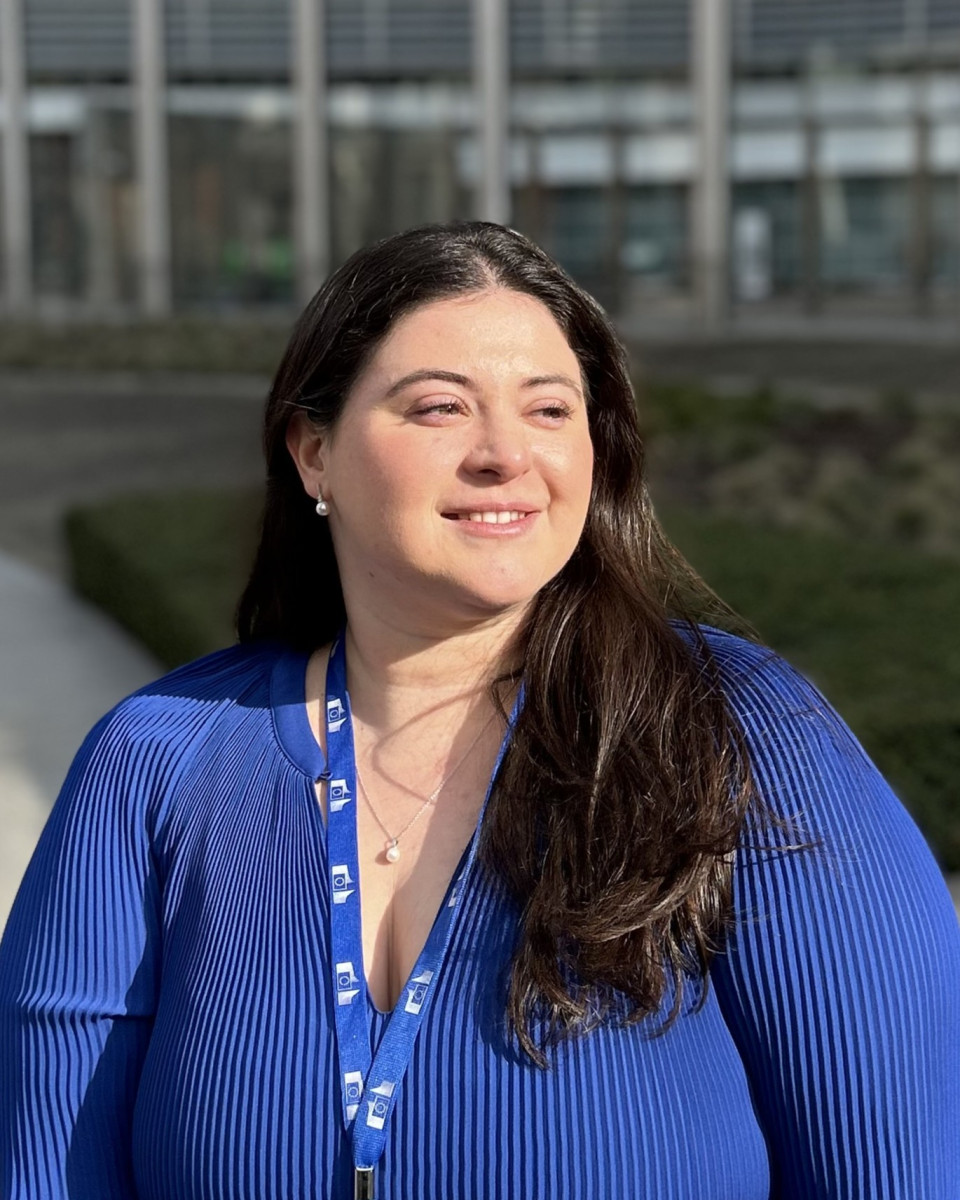
Giulia Galletti is an LL.M. candidate in European Legal Studies at the College of Europe. She holds a Master's degree in Law from the University of Bologna and an LL.M. from King’s College London, and has been admitted to the Italian Bar.
She previously trained at an international law firm and completed a Blue Book traineeship at the European Commission (DG COMP). Her research interests include Competition Law and Economics, Financial Services, and International Trade.
She currently serves as President of the Competition Society at the College of Europe.

Anna HAESAERT
Anna Haesaert is an LL.M. candidate in European Legal Studies at the College of Europe. She holds an LL.M. from Maastricht University and is registered in parallel with the College in the Master's in Belgian Law at the KU Leuven. She previously completed traineeships with an in-house legal counsel at a world-leading R&D hub in nanoelectronics and digital technologies, and in a Belgian law firm. Her research interests include Competition Law and Intellectual Property.
She is part of the board of the Competition Society of the College of Europe.

Evangelia KOSTOPOULOU
Evangelia Kostopoulou is an LL.M. candidate in European Legal Studies at the College of Europe. She holds a Master's degree in law and technology from Tilburg University and is admitted to the Greek Bar. She previously trained at EY Law, one of the largest national law firms in Greece.
Her academic interests lie in EU Competition Law, and she is particularly interested in questions of consumer protection, sustainability transitions and digital platform governance. Alongside these substantive concerns, she has a strong interest in competition procedure and the procedural safeguards that structure EU antitrust enforcement.
She currently serves as a Board Member of the Competition Society at the College of Europe.

Maria VASTARDI
Maria Vastardi is an LL.M. candidate in European Legal Studies at the College of Europe. She holds an LL.B. and an LL.M. in European Union Law from the National and Kapodistrian University of Athens and has been admitted to the Athens Bar Association. She previously worked as a junior associate at a major Greek law firm and completed a traineeship at the Court of Justice of the EU (cabinet of AG Rantos). Her research interests include Constitutional Law, Fundamental Rights, and Competition Law.
She currently serves as President of the Hellenic Society and member of the board of the Competition Society at the College of Europe.