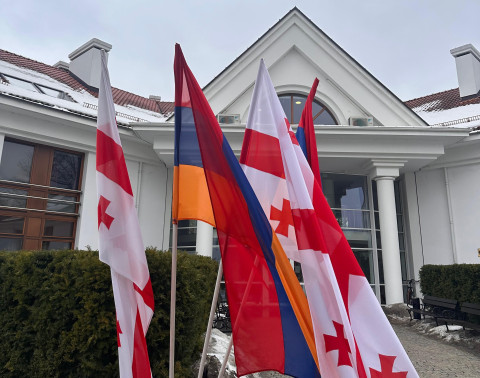
Armenian-Georgian Cultural Days in Natolin
The College of Europe in Natolin hosted Armenian-Georgian Cultural Days - celebrating the rich traditions, history, and shared heritage of Armenia and Georgia. Organised by students for the Natolin...
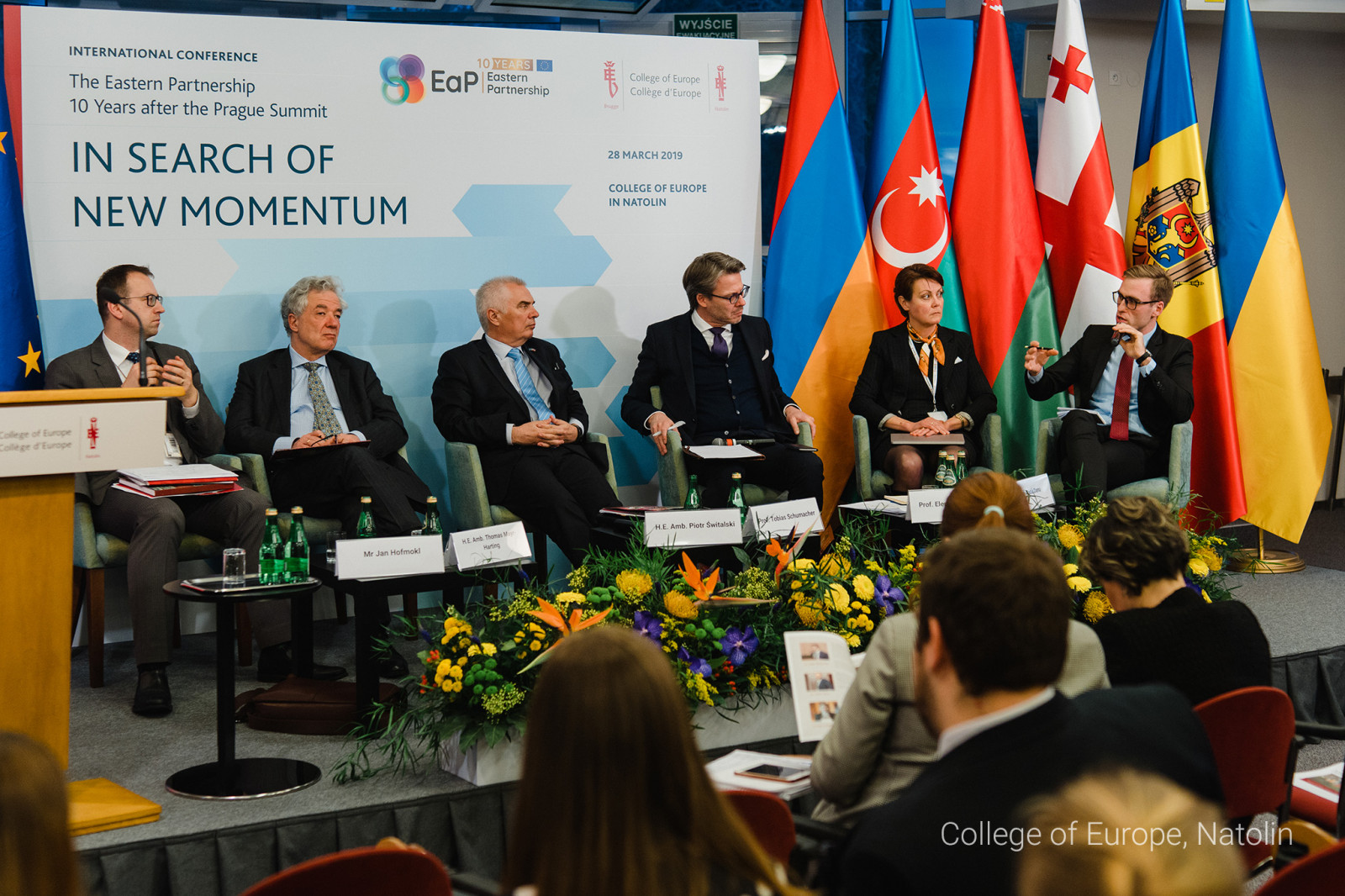 This major allows students to obtain a better understanding of the multi-faceted policies of the European Union towards the countries in the EU’s neigbourhoods (East, South and Southeast). It also provides them with an opportunity to capture the political, socio-political, socio-economic, legal, energy- and identity related developments in the neighbourhood itself.
The major draws on EU studies, EU foreign policy analysis, peace and conflict studies to achieve its goals. Students further deepen their knowledge of the broader historical context by taking a course in the European History and Civilization Major.
The second semester study trip is an integral part of the academic programme, participation is obligatory and students are expected to attend all related conferences and activities. It counts for 2 ECTS.
Students following one of the Majors are obligated to select a total of seven Specialist Courses. The following rules apply:
Students are automatically registered in the major's research colloquium.
Students must select two compact seminars.
Participation in the simulation games is optional.
The Cooperation with External Partners modules are optional. There is no limit on the total number of these modules that can be taken by the students.
The academic programme above applies to the 2026-2027 academic year and reflects the version approved by the Academic Council as of 18 June 2026.
The Skills and Capacity Building offer complements the academic programme with on-site, made-to-measure support and guidance in helping to shape the students’ professional paths.
In addition to benefitting from a bilingual study programme, students can take advantage of language courses on offer implemented by the Languages and Intercultural Dialogue Office. The following languages are on offer: English, French, Italian, German, Polish, Russian, Spanish and Arabic. The courses are tailored to the individual students' needs, and are also focused on transversal skills required by employers.